Read more
Glass transition (Tg) in food: why dry products turn sticky, soft or caked
Why powders cake, snacks go soft and candies stick: what the glass transition (Tg) explains, what it misses, and how to turn it into a moisture and pack spec.

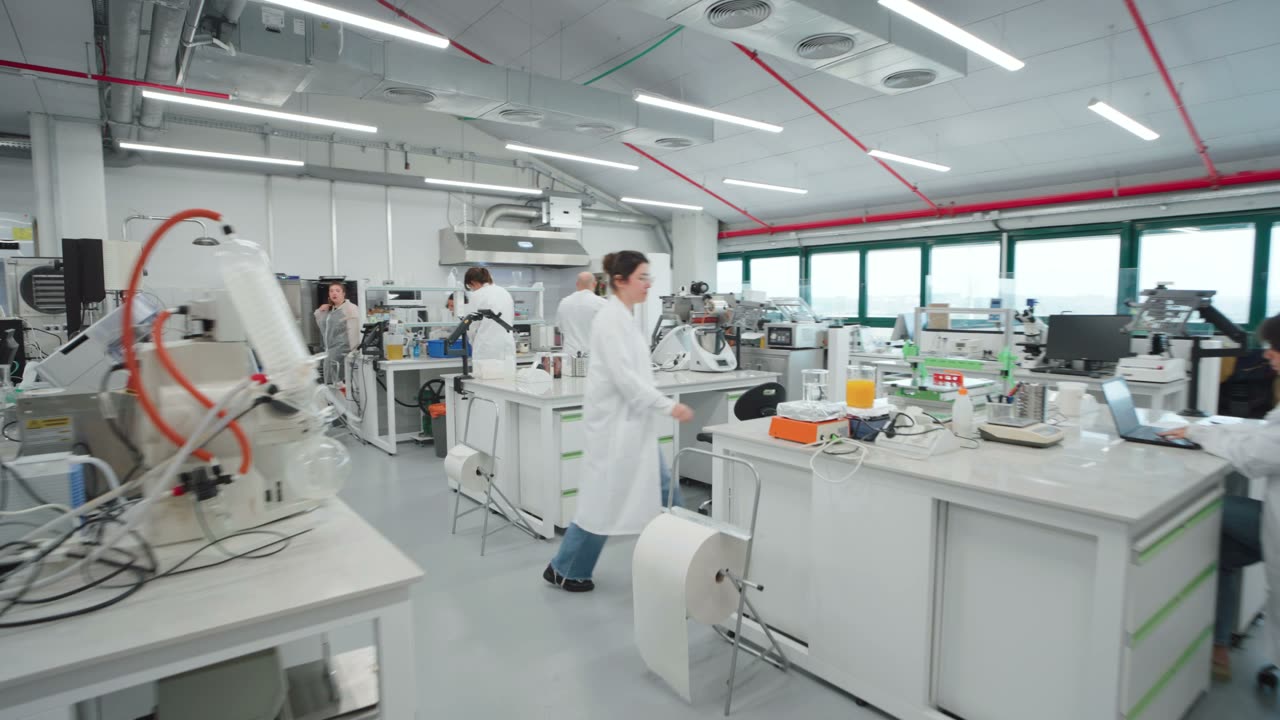


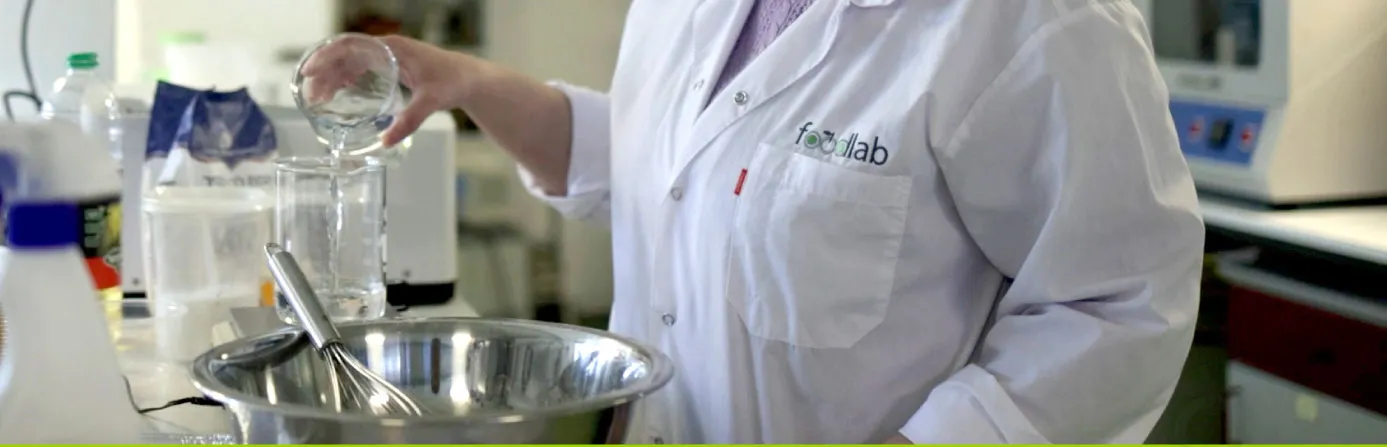
From idea to a product that can be manufactured — in our lab in Yakum, Israel, on real process equipment, built on the experience of people who have built products, run production and put them on the shelf.
An innovative product in a traditional industry is no small challenge. The idea is only the beginning; the difficulty shows up later. What is scarce is people who have already walked the road from idea to shelf and know where the real challenge lies. Today, when a tidy answer is minutes away for anyone, that is truer than ever.

We built products, ran production and put them on the shelf in Israel and the US.
We test processes and parameters in computer simulations and on benchtop process equipment before pilot or production.
In the food industry, science and cooking arrive together. A breakthrough food product takes understanding the science on one side and creating emotion and connection on the other.
Our job is to make sure it rests on what works on the line, not on what is true in theory.
From a written brief, through formulation and prototypes on process equipment, to a product file your plant can manufacture from.
Every stage is recorded as numbers: aw, pH, Brix, viscosity, time and temperature. You taste with us, and we iterate.
Freeze and spray drying, extrusion, fermentation, homogenization to 1,000 bar, pasteurization, UHT, separations, evaporation, grinding, sterilization and texture analysis, under one roof.
This type of lab work allows for the detailed study of processes, accurate parameter measurement and team training, before moving to pilot or industrial scale.
An extension of your R&D team: extra hands, equipment your plant may lack, and parameters tested at benchtop scale before your pilot or line trial. We work with your team, not instead of it.














Why powders cake, snacks go soft and candies stick: what the glass transition (Tg) explains, what it misses, and how to turn it into a moisture and pack spec.
How to shrink a one-year shelf-life study into weeks, when it works, and when excess stress creates a failure that never happens on the shelf.
Clients now arrive with a tidy answer from an AI model. A good starting point, not a threat. Where the answer ends and real development begins.
“You can’t just eat good food. You’ve got to talk about it too” Kurt Vonnegut
 050-397-0305
 office@foodlab.co.il
 Greenwork campus, Yakum, Israel