
 Product development
New Food Product Development
A recipe that works in the kitchen is not yet a product a factory can make. Foodlab develops new food products and technologies with food companies, startups and entrepreneurs at its lab in Yakum, Israel, from idea to market-ready product. We test each decision in computer simulation and in trials on real process equipment, so problems surface early and cheaply in the lab, not on your production line. Our simulation software speeds up the NPD process and explores scale-up before we run the trials.
aw · pH · BrixTPA1,000 barUHTP / F valueASLT
The Foodlab development process
Most projects move through six stages; moving from one stage to the next is the client's call.
- Concept and brief. We start with a written brief: the product, target consumer, nutritional targets and claims, market, target cost, raw materials, regulation, packaging and shelf life. If all you have is an idea, or an answer from an AI model, we turn it into a brief a lab can test. Our work begins where the model's answer ends: in tasting, texture and the production line.
- Formulation. We build the first formulas around what will matter on the line and the shelf: cost, raw materials, nutrition, allergens and stability. Water activity (aw), pH and moisture-sorption behaviour set the targets for how the product will keep. We do that first in our simulation models, so the bench trials start with a better understanding of the trade-offs and interactions.
- Benchtop trials. We make prototypes on benchtop equipment chosen to mimic industrial unit operations, from freeze and spray drying to extrusion, a 1,000-bar homogenizer and UHT. Each prototype is recorded as numbers: aw, pH, Brix, viscosity, time and temperature. Texture profile analysis (TPA) turns words like "crunchy" or "chewy" into measurements we compare with tasting. You taste with us, and we iterate.
- Process design. We define the process sequence and its operating window: mixing, heating, cooling and holding times. For safety and stability we design with hurdle technology: pH, water activity, heat treatment and packaging working together, not one barrier alone. For heat-treated products we calculate pasteurization (P) and sterilization (F) values from temperature-probe data.
- Scale-up readiness. We develop with scale-up in mind from the first prototype. We identify the critical process parameters and check how shear, heat transfer, mass transfer and product geometry will change on industrial equipment. Where a process is hard to observe, our physics-based Food Simulations help narrow the trials before we run them. You receive a product file: raw-material specifications, process parameters, production instructions and packaging recommendations. We can also support the first production trials at your plant.
- Shelf-life validation. We find what limits your product's shelf life and test against it. Common causes are moisture migration, a crisp product going soft past its glass transition, rancidity from lipid oxidation, and microbial growth. Accelerated shelf-life testing (ASLT), modelled with Arrhenius kinetics, gives an early read; real-time storage confirms it. When shelf life is the main problem, The Whole Package, our shelf-life diagnostics and packaging service, goes deeper. Accredited microbiological and nutritional tests go to external laboratories.
How you work with us: the Innovation Hub
You decide how deep the engagement goes, and you can change it as the product matures. Every option runs in our lab at the Greenwork campus in Yakum, with the same team:
- A single day in the lab. Book lab time for a focused trial. After training on the equipment and our lab SOPs, your team works and runs trials with our raw-material stock, and our staff accompanies and helps. Weekly and monthly access is available too.
- A process run for you. We toll-process your product at development scale: freeze drying, sterilization or modified-atmosphere packaging (MAP).
- A development project. We develop the product for you, or alongside your R&D team, from brief to product file.
- A full incubation period. Startups can move in for a whole development stage, with lab access, a workstation, meeting space, our advice and other food companies around them.
You can start with one day of bench time and grow into a full development project or an incubation without changing lab or team. More about the Innovation Hub.
Who we help
- Startups: from a technology to a product that can be manufactured and priced. We give you a sober view built on many years of experience.
- Established food manufacturers: an extension of your R&D team, with extra capacity and equipment your plant may lack. We test parameters at benchtop scale before your pilot or line trial, working with your team, not instead of it.
- Entrepreneurs: from an idea, a home recipe or a brand concept to a product a manufacturer can produce.
Categories we work in
Our deepest track record:
- Bars and snacks. We formulated the first 16 KIND SKUs made in the US. We also developed high-protein, plant-based baked snacks for Meir Beigel and freeze-dried snacks for Upland Snacks, under a licensing agreement with Strauss.
- Ready-to-eat (RTE) foods. We developed frozen heat-and-eat chicken products for Tnuva and fish products for Tnuva, and we continue to develop the field.
- Frozen foods. Frozen vegetables, soups, dishes and frozen bakery items for Tnuva brands.
- Sauces and spreads. We developed sauces and spreads for Olivia, sold in Israel and abroad.
We have also developed plant-based and vegan products, including food applications for InnovoPro's chickpea protein. Our beverage work covers milk-based, plant-based and functional drinks. For juices, our lab is equipped with Brix measurement, pasteurization and UHT, centrifugation and membrane separation. Chocolate, sweet spreads and tahini are other areas of expertise. See clients and projects.
Why Foodlab
We have built food companies, run production and put products on the shelf. Some of our products succeeded and some failed, and both taught us where the challenge hides. Dozens of products we developed are sold in stores around the world.
- Gil de Picciotto, co-founder. A former fighter pilot turned chef, Gil has developed food products in Israel, the USA, Europe and China for more than 20 years.
- Yoel Benesh, co-founder. Yoel founded Olivia, an Israeli maker of sauces and spreads, and became Head of R&D at Tnuva after Tnuva acquired it.
- Tamar Feldman, R&D and lab manager. Tamar studied food science and biochemistry at the Hebrew University and runs our project development and lab operations.
Your formulations, process data and results belong to you, and we sign an NDA when needed.
Project flow
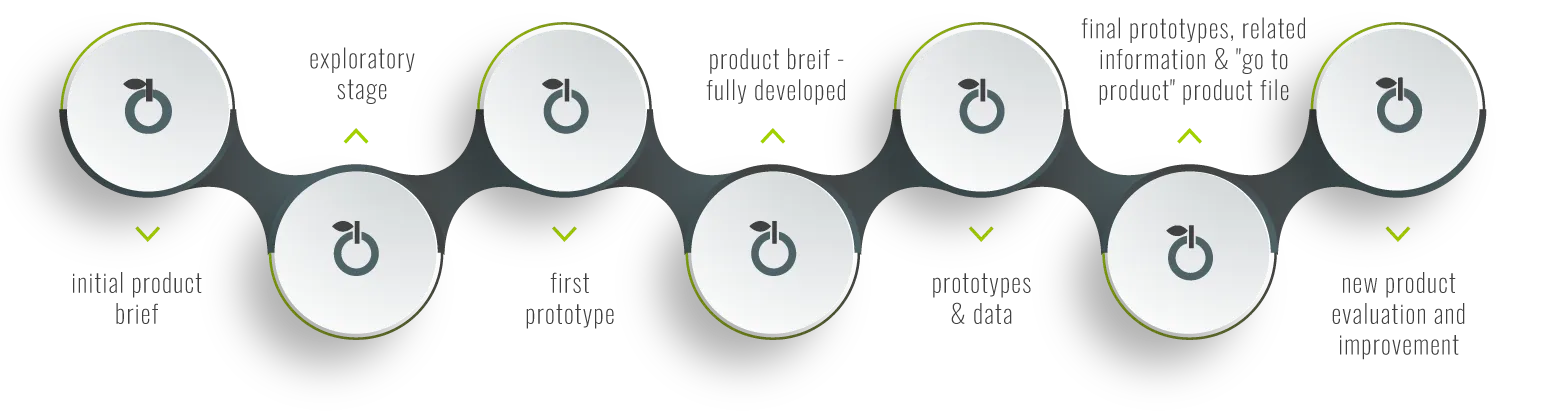
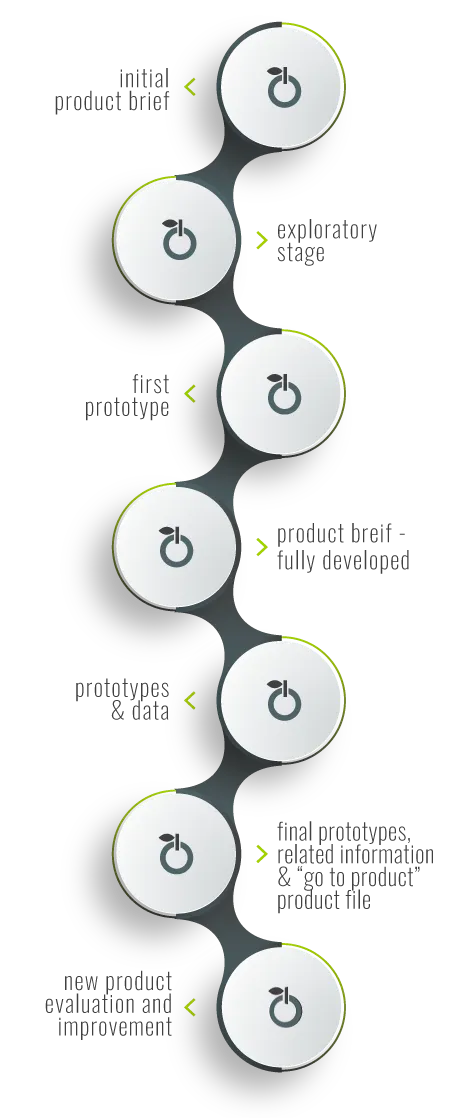
- Concept and brief Product, consumer, nutritional targets, market, target cost, raw materials, regulation, packaging and shelf life.
- Formulation First formulas built around what will matter on the line and the shelf: cost, availability, allergens and stability.
- Benchtop trials Prototypes on equipment that mimics the line: drying, extrusion, homogenization, UHT.
- Process design The sequence and its operating window. Hurdle technology: pH, aw, heat and packaging together.
- Scale-up readiness Critical parameters, shear and heat-transfer changes, and a product file for the plant.
- Shelf-life validation Find what limits shelf life and test against it: ASLT and real-time storage.
Frequently asked questions
How long does it take to develop a new food product?
It depends on the complexity of the product, availability of raw materials, number of prototypes, processing technology, regulatory requirements, packaging and the shelf-life evidence required. An initial benchtop prototype can often be developed within several weeks, but a commercially ready product usually needs additional formulation, process, packaging, scale-up and shelf-life work. We define the stages and an indicative schedule in the project proposal.
How much does a food product development project cost?
The cost depends on scope, product complexity, number of prototypes, technologies involved, analytical work, packaging and shelf-life studies, and the level of pilot or industrial scale-up support. We first review the brief, then propose a project structure, work plan, schedule and budget. The project is split into stages, and the client commits to one stage at a time.
What should I prepare before starting?
A useful brief includes: the product and consumer use; the intended market; target nutritional values and claims; ingredient restrictions and allergens; target price and pack size; storage conditions and required shelf life; available manufacturing equipment; estimated volume; reference products or desired sensory characteristics; and any existing formulas, trials or technical data. If some of this is not available yet, we help turn an early idea into a structured brief.
Who owns the formulations and results?
You do. All formulations, process information, test results and intellectual property created during the project belong to the client. Foodlab treats formulations, processes, commercial plans and results as confidential, and signs a non-disclosure agreement where required before detailed information is exchanged.
Do you work with international clients?
Yes. Over the years we built a methodology for developing products with remote teams: technical meetings, exchange of samples and raw materials, documented laboratory trials, video review of prototypes, and support for production trials at the client's or manufacturer's facility. We have worked this way with clients in Israel, the USA, Europe and China.
Let's test your idea in the lab.

Tell us about the product, the technology or the problem. We will come back for a first conversation, then ask for a short brief and return with a proposal.
 Talk to us
Questions about cost, timelines or who owns the formula? Read the FAQ